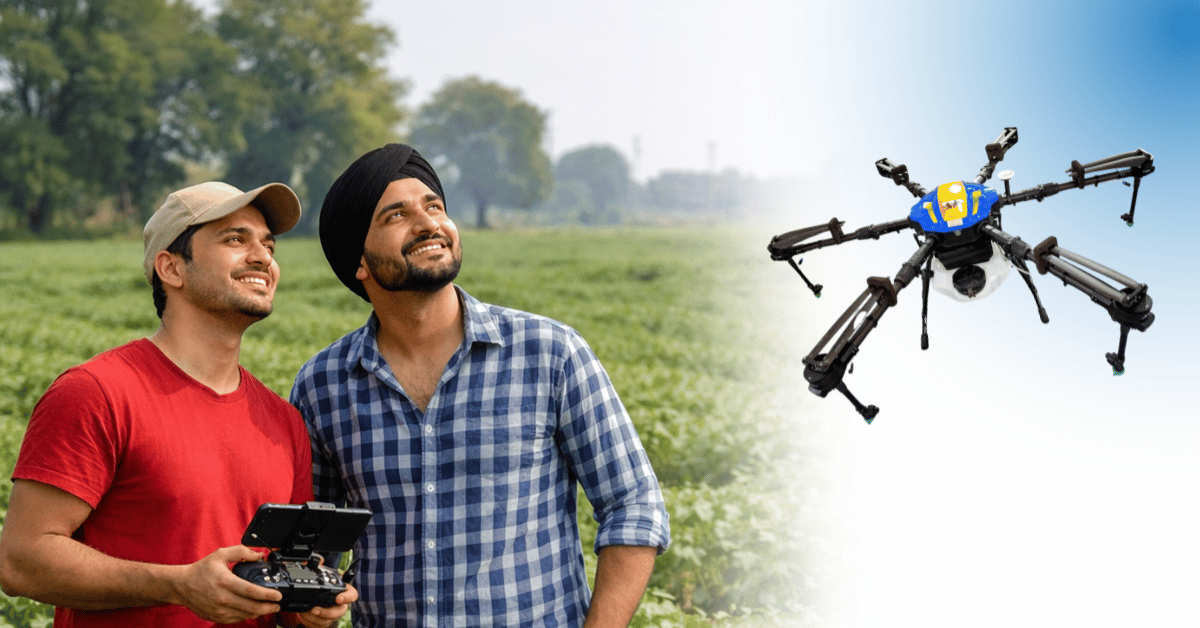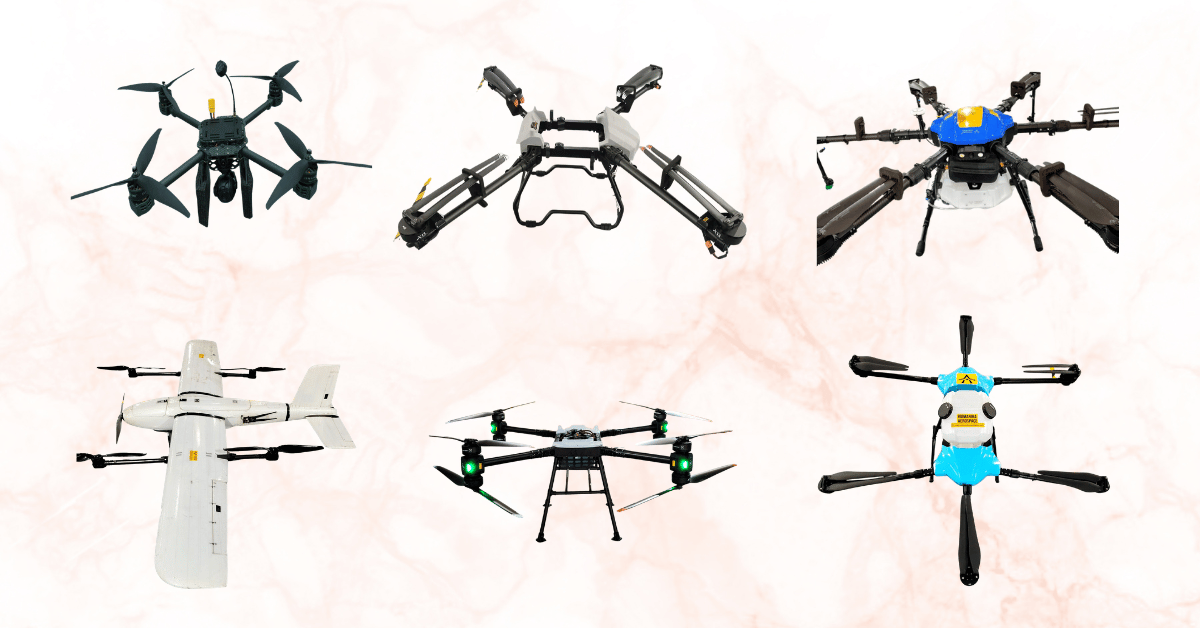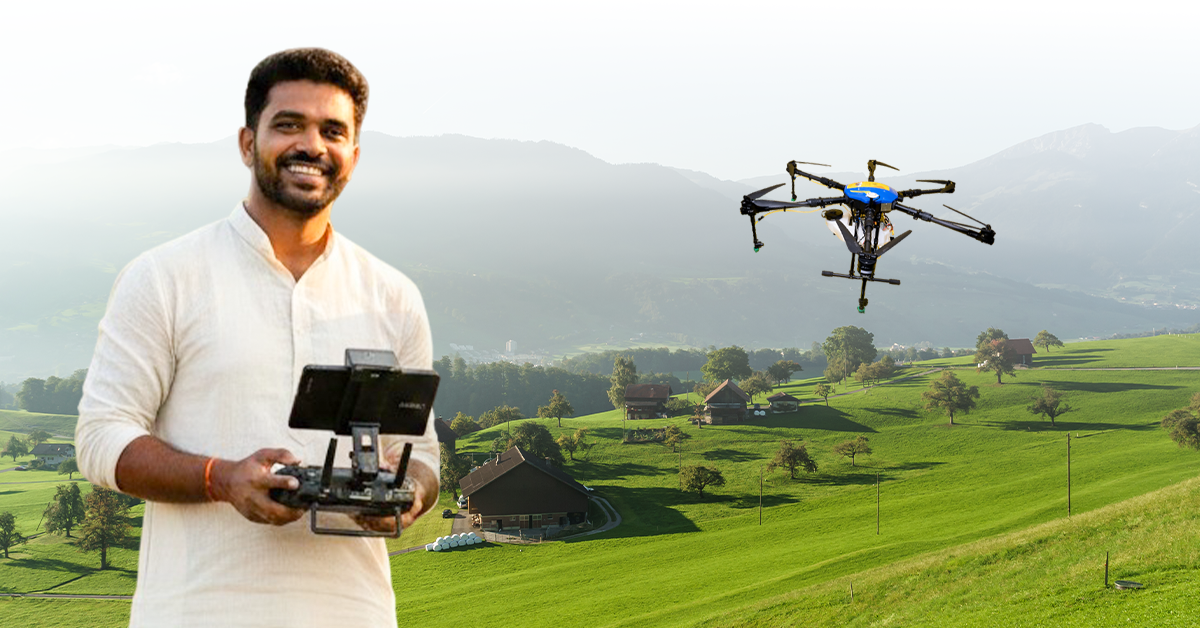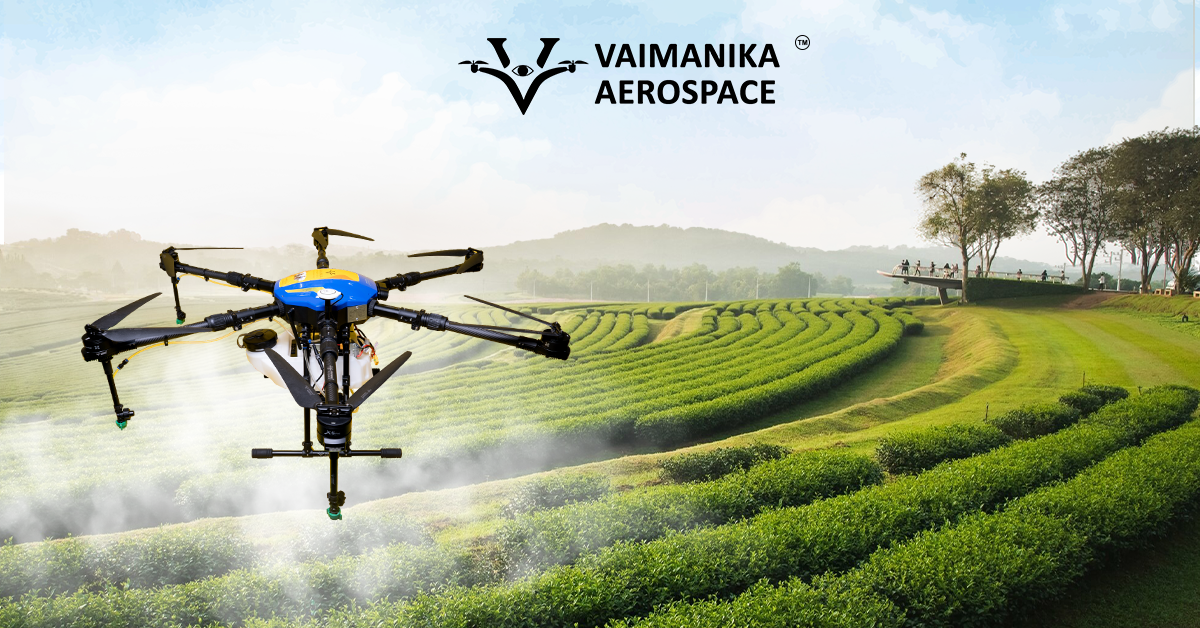

Agricultural drones in India are generally used for spraying pesticides, but their role in farming has advanced much beyond the purpose of spraying only pesticides. The advancements in precision farming and the multiple pressures on farmers to reduce costs and increase efficiencies has led Agricultural drones to provide farmers with many other multi-faceted uses throughout the crop cycle.
Drone companies in India are now creating new techniques and technologies to provide solutions to real agricultural challenges that will assist farmers in making improved decisions, save time and manage their input in a better manner.
Monitoring Crop Health
One of the major uses of Agricultural Drones is to monitor crop health. Aerial imagery can be produced quickly to provide a visual representation of a crop’s growth pattern over large areas of land, allowing for the identification of different growth stages and the ability to monitor changes as they occur. This will allow for the early detection of pests, disease, nutritional deficiencies, and/or water stress before becoming severe, allowing for rapid action before crop losses occur due to these events.
Precision Fertilizer/Nutrient Applications
Agriculture drones are also being used widely for the application of liquid fertilizers and micronutrients. Drones provide farmers with a method to apply inputs in a targeted and controlled manner; input application using a traditional ground-based method typically covers the entire area in which the input is being applied. By applying inputs only to the areas where they are needed, Farmers have the ability to maximize nutrient absorption, decrease nutrient wastage via leaching and/or hydrolysis. Overall this will lead to increased farm productivity while decreasing farming costs making farming more sustainable and efficient.
Field Mapping and Planning
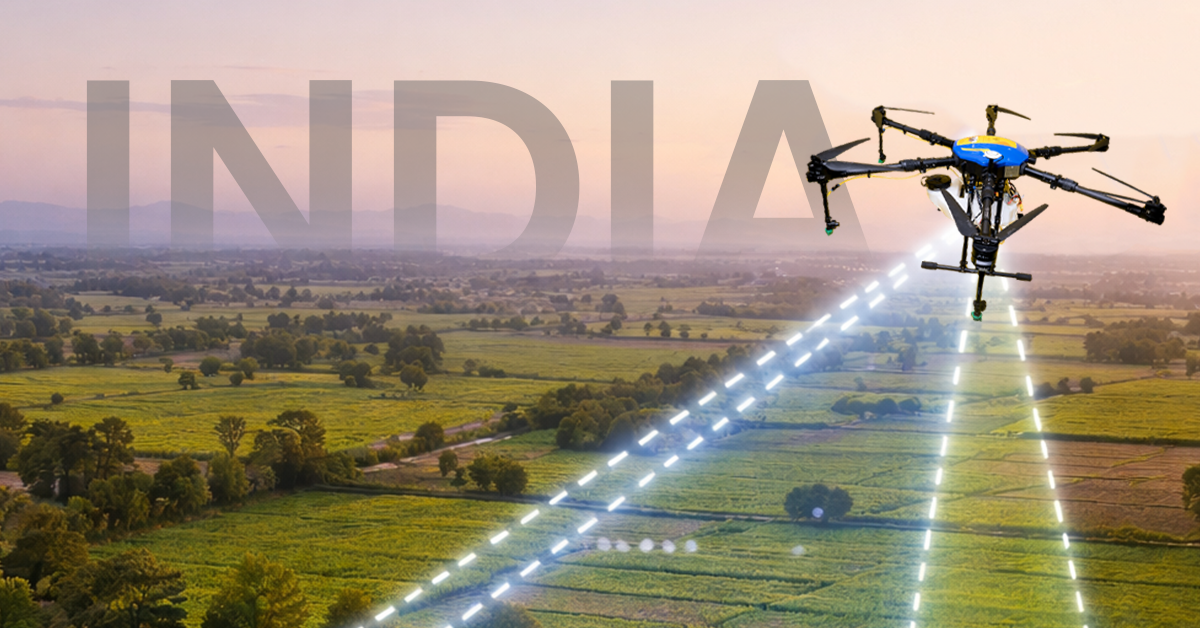
Agriculture drones are capable of generating precise field maps that disclose field boundaries, the extent of elevation variations, as well as the spatial arrangement of crops according to the farmer’s needs for planning proper irrigation, planting design, and managing farm operations.
Many Indian drone manufacturers are integrating mapping functions to assist farmers in transitioning to a data-driven decision-making process.
Irrigation and Water Stress Analysis
One of the largest challenges facing Indian farmers is the availability of sufficient water. Drones provide farmers with the ability to identify unevenly irrigated areas within a field, dry patches, and water-stressed areas. This information will enable farmers to modify their irrigation schedules, repair blockages in irrigation systems, and reduce waste throughout the irrigation cycle.
This is particularly useful in areas where water resources are limited.
Assessing Crop Damage After Disasters
Following natural disasters, such as floods or droughts, agriculture drones can quickly survey large areas to determine the extent of crop damage. In comparison to the traditional method of using manual surveys, drones enable farmers and agricultural authorities to assess crop losses much more quickly and efficiently and plan for a more organized recovery.
Facilitating Agri Drone Service Providers
Drones for agricultural use have propelled the creation of services-based models within the agriculture industry. As a result of the need for trained drone operators to operate drones on behalf of multiple farmers, agri drone service providers provide growers with access to technology without the requirement for ownership.
This creates and expands opportunities for rural entrepreneurship, while also allowing drone manufacturers to expand their customer bases at a quick pace.
Conclusion
Drones used in agricultural applications are evolving into versatile tools that serve multiple applications beyond the application of crop inputs like pesticides. They have become instrumental for different facets of farm management such as crop monitoring and assessing nutrient applications, creating maps, evaluating irrigation and estimating possible agricultural losses caused by unexpected events. As drone manufacturers in India create more sophisticated and advanced types of agricultural drones, they will increasingly support and augment farmers’ abilities to increase productivity and sustain success into the future.