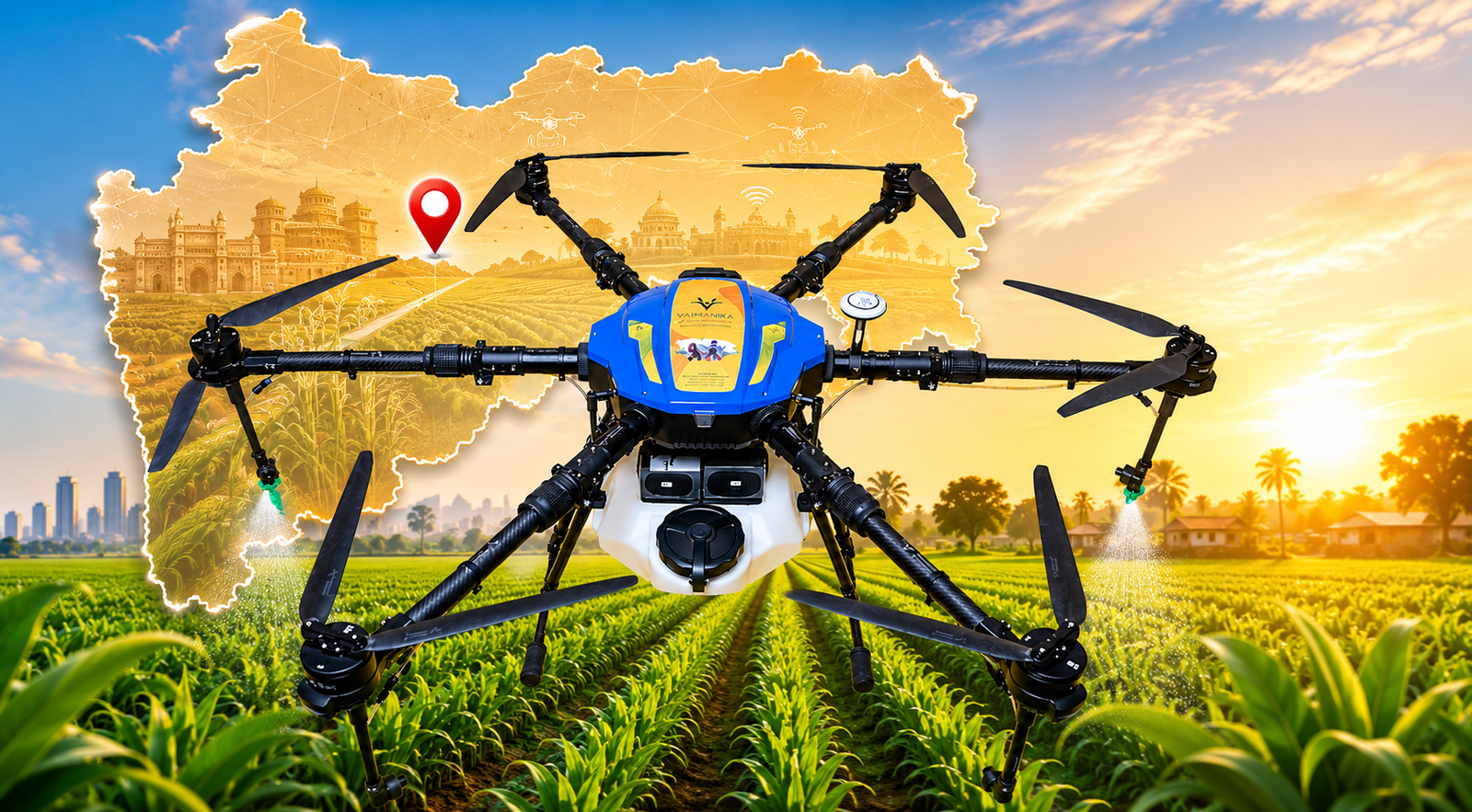

Maharashtra Autonomous Systems Policy 2026 aims to accelerate the adoption of agricultural drones, robotics, artificial intelligence, and precision farming technologies, positioning the state as a leader in India’s smart agriculture revolution.
Maharashtra Unveils Ambitious Autonomous Systems Policy 2026
In a major step toward modernizing agriculture and promoting emerging technologies, Maharashtra has approved the Autonomous Systems Policy 2026, a comprehensive initiative designed to create a large-scale ecosystem for autonomous technologies, including drones, robotics, artificial intelligence (AI), and precision farming solutions.
The policy is expected to attract investments worth ₹25,000 crore over the next five years and aims to establish Maharashtra as India’s leading hub for autonomous systems manufacturing, innovation, and deployment.
As one of India’s largest agricultural states and the country’s second-largest tractor market, Maharashtra is uniquely positioned to drive the next phase of agricultural transformation through smart farming technologies.
How Autonomous Agriculture Is Transforming Modern Farming
Autonomous agriculture refers to the use of advanced technologies such as agricultural drones, robotics, sensors, artificial intelligence, and automated machinery to improve farm productivity and decision-making.
These technologies enable farmers to:
- Monitor crop health in real time
- Optimize fertilizer and pesticide application
- Reduce input costs
- Improve resource efficiency
- Increase crop yields
- Make data-driven farming decisions
With increasing pressure on food production, labor shortages, and climate challenges, autonomous agriculture is becoming an essential component of modern farming systems worldwide.
Agricultural Drones to Play a Key Role
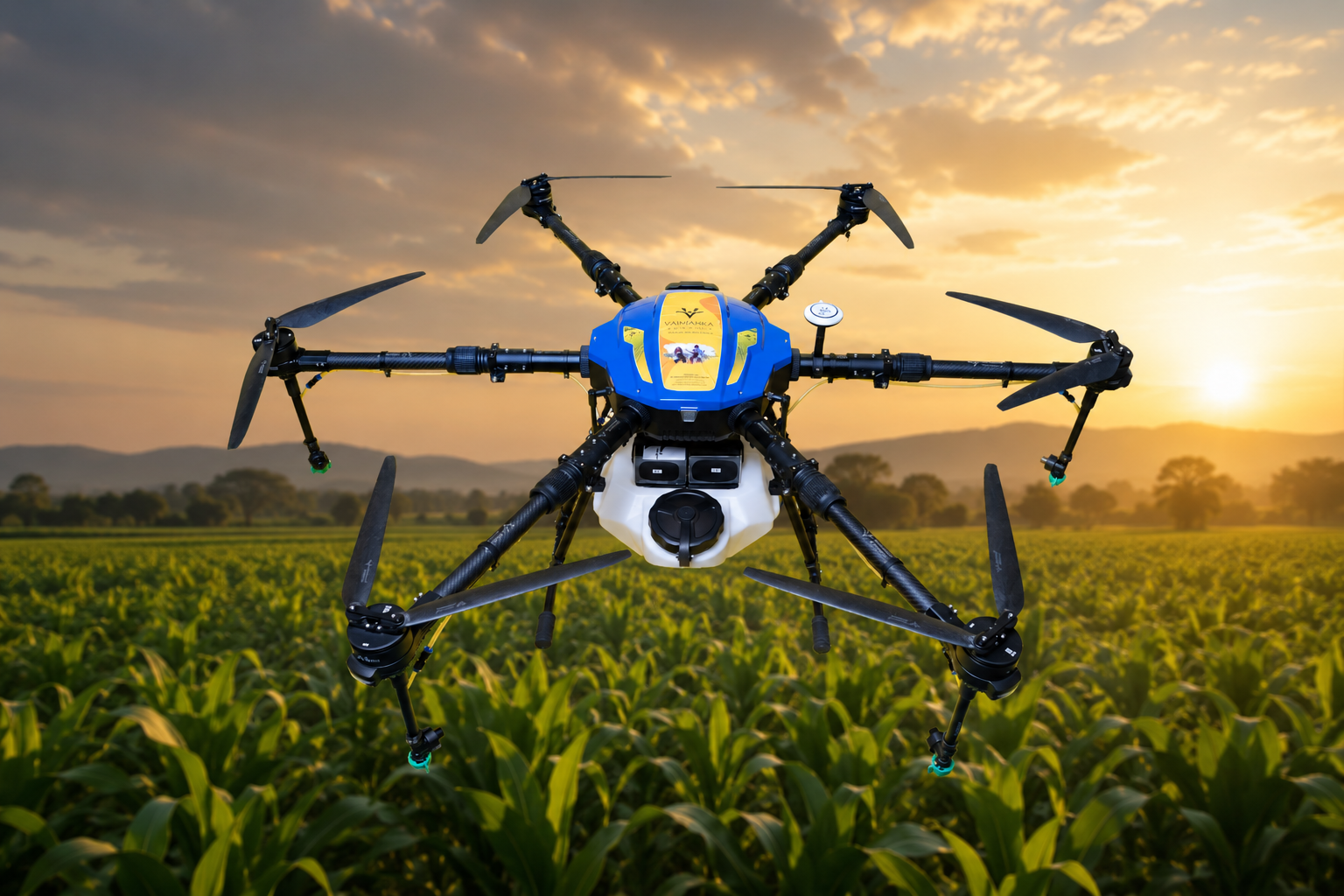
One of the major focus areas of the Maharashtra Autonomous Systems Policy is the expansion of drone technology in agriculture.
Agricultural drones are rapidly becoming indispensable tools for precision farming. They can perform a wide range of operations, including:
Crop Monitoring
Drone-based imaging systems can detect crop stress, disease outbreaks, nutrient deficiencies, and irrigation issues long before they become visible to the naked eye.
Precision Spraying
Agricultural drones enable targeted spraying of pesticides, fertilizers, and micronutrients, significantly reducing chemical wastage while improving coverage and efficiency.
Field Mapping and Surveying
Advanced drone sensors can generate high-resolution field maps that help farmers better understand crop conditions and improve farm planning.
Data Collection and Analytics
Real-time aerial data supports precision agriculture by providing actionable insights for better farm management.
Maharashtra’s Vision for Precision Farming
The policy emphasizes the adoption of precision farming technologies, which use data and automation to maximize agricultural productivity while minimizing resource consumption.
Precision farming can help farmers:
- Use water more efficiently
- Reduce fertilizer consumption
- Lower operational costs
- Improve crop quality
- Increase profitability
By supporting technology providers and service operators, Maharashtra aims to make precision agriculture more accessible to farmers across the state.
Building a Complete Agricultural Drone Ecosystem
Unlike many technology initiatives that focus only on equipment deployment, Maharashtra’s policy adopts a holistic ecosystem approach.
The government plans to strengthen:
- Agricultural drone training programs
- Drone pilot certification initiatives
- Rural service delivery networks
- Research and development activities
- Manufacturing capabilities
- Startup incubation and innovation programs
This comprehensive strategy is expected to create a sustainable environment for long-term growth in the agricultural technology sector.
Supporting the Namo Drone Didi Programme
The policy aligns closely with the Government of India’s Namo Drone Didi Programme, which aims to expand access to drone-based agricultural services through women-led Self-Help Groups (SHGs).
By strengthening drone infrastructure, training, and service networks, Maharashtra can accelerate the adoption of drone technology among rural communities and improve access to modern farming solutions.
New Opportunities for Agri-Tech Startups and Rural Entrepreneurs
The Autonomous Systems Policy 2026 is expected to create significant opportunities for:
- Agri-tech startups
- Drone manufacturers
- Robotics developers
- Drone-as-a-Service (DaaS) providers
- Precision agriculture companies
- Rural entrepreneurs
- Agricultural service providers
As demand for drone-based crop monitoring, spraying, mapping, and analytics services grows, new business models are likely to emerge across rural India.
Why Maharashtra Could Lead India’s Autonomous Agriculture Revolution
Maharashtra has already invested heavily in digital agriculture, artificial intelligence, and technology-driven farming initiatives. The new policy builds upon these foundations and demonstrates a long-term commitment to agricultural innovation.
Several factors give Maharashtra a strategic advantage:
- Strong agricultural economy
- Large farmer base
- Growing agri-tech startup ecosystem
- Expanding drone manufacturing sector
- Supportive government policies
- Increasing adoption of digital farming technologies
These advantages position the state to become a national leader in autonomous agriculture and smart farming innovation.
The Road Ahead
The success of Maharashtra’s Autonomous Systems Policy will ultimately depend on effective implementation, farmer adoption, infrastructure development, and ecosystem collaboration.
However, the policy represents one of the most comprehensive efforts by an Indian state to promote agricultural drones, robotics, and precision farming technologies at scale.
If successfully executed, Maharashtra could become a model for other states and play a pivotal role in accelerating India’s transition toward autonomous agriculture.
As drones, AI, robotics, and data-driven farming practices become increasingly important, Maharashtra’s ₹25,000 crore initiative may prove to be a defining milestone in the future of Indian agriculture.